Patient testimonials

https://youtube.com/shorts/7usH_0Uh3F0?si=bxos_EHc8wSXABFwFull Endoscopic Spine Surgery
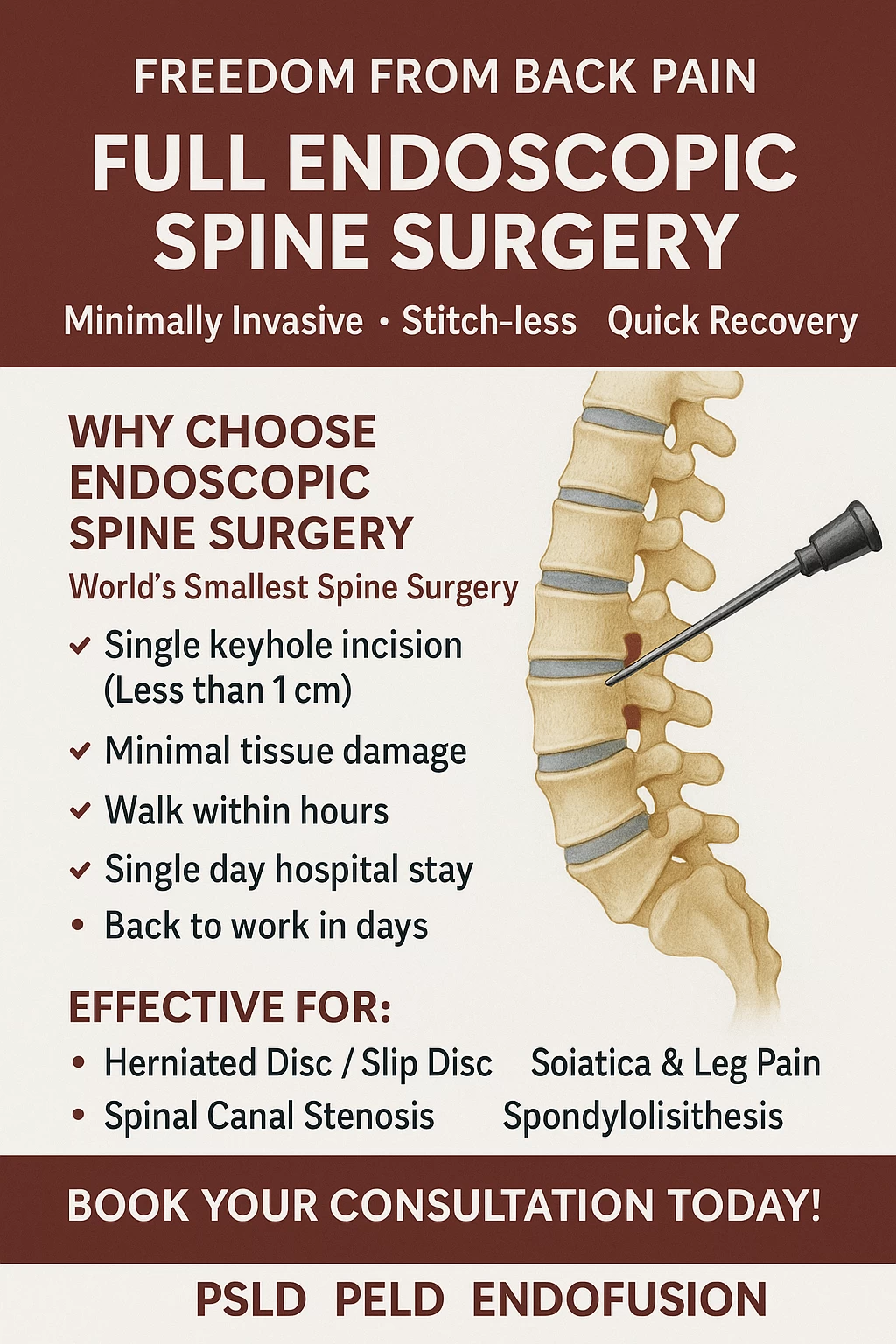
Endoscopic Spine Surgery is a modern, minimally invasive technique for treating spinal problems like slipped discs, spinal stenosis, nerve compression, and certain types of back and leg pain.
Instead of a large incision, the surgeon uses a tiny skin cut (often less than 1 cm) to insert a high-definition camera (endoscope) and specialized surgical instruments directly to the problem area. This allows the surgeon to see the spine structures on a screen and perform precise work without disturbing much of the surrounding muscles or tissues.
Key Features
- Small incision – typically 8–10 mm
- Minimal muscle damage – less pain after surgery
- Local or general anesthesia – sometimes done under local for faster recovery
- Day-care or short hospital stay – often discharged within 24 hours
- Faster rehabilitation – most patients walk the same or next day
Benefits Compared to Traditional Spine Surgery
|
Traditional Surgery |
Endoscopic Spine Surgery |
|
Large incision (5–10 cm) |
Tiny incision (0.8–1 cm) |
|
Significant muscle cutting |
Minimal tissue disruption |
|
Longer hospital stay |
Often same-day discharge |
|
More post-op pain & scarring |
Less pain, minimal scar |
|
Longer recovery time |
Quicker return to daily activities |
Common Conditions Treated
- Lumbar disc herniation (slipped disc)
- Lumbar spinal stenosis
- Sciatica (nerve compression)
- Certain cervical (neck) disc problems
- Foraminal stenosis (nerve root compression)
Recovery Timeline
- Day 1–2: Walking with minimal assistance
- Week 1: Light daily activities
- Weeks 2–4: Gradual return to work (desk jobs sooner)
- Weeks 4–6: Resume sports/strenuous activities (as advised)
