What is full endoscopic Spine Surgery..

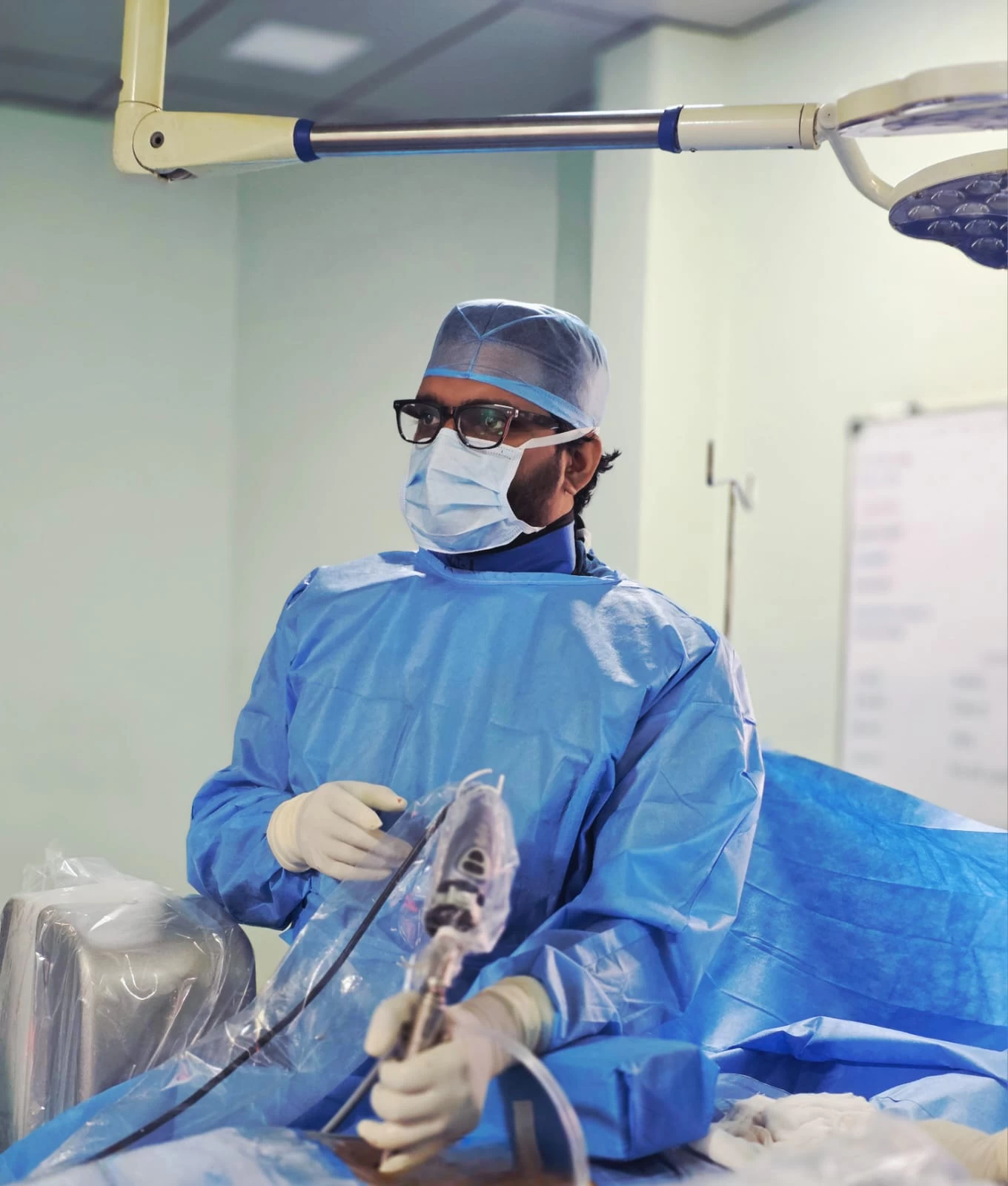
Full Endoscopic Spine Surgery/Uniportal spine endoscopy
Full Endoscopic /uniportal Spine Surgery is a modern, least invasive technique for treating spinal problems like slipped discs, spinal stenosis, nerve compression, and certain types of back and leg pain.
Instead of a large incision, the surgeon uses a single tiny skin cut (often less than 1 cm) to insert a high-definition camera (endoscope) and specialized surgical instruments directly to the problem area. This allows the surgeon to see the spine structures on a screen and perform precise work without disturbing much of the surrounding muscles or tissues.
Other techniques like UBE uses two separate incisions . There is rising concerns of high volume of fluid extravasation to tissues which make it an inferior technique compared to monoportal/full endoscopy
PELD- Percutaneous endoscopic lumbar discectomy was a technique introduced to treat disc prolapse. Later it got developed and the indications also stretched to other conditions.
There are two techniques of full endoscopy. Transforaminal and Interlaminar techniques.Transforaminal surgery can be done under local anesthesia and is least invasive.It primarily address the disc pathology.Interlaminar surgery usually need GA or Epidural anesthesia.
PSLD is the latest technique which uses a larger stenoscope and can address both disc and stenosis, also the scope has more freedom of movement unlike transforaminal and multifocal pathologies can be addressed in a single sitting
Key Features
- Small single incision – typically 8–10 mm
- Minimal muscle damage – less pain after surgery
- Local or general anesthesia – sometimes done under local anesthesia
- Day-care or short hospital stay – often discharged within 24 hours
- Faster rehabilitation – most patients walk the same or next day
Benefits Compared to Traditional Spine Surgery
|
Traditional Surgery |
Full Endoscopic Spine Surgery |
|
Large incision (5–10 cm) |
Tiny incision (0.8–1 cm) |
|
Significant muscle cutting |
Minimal tissue disruption |
|
Longer hospital stay |
Often same-day /1 day discharge |
|
More post-op pain & scarring |
Less pain, minimal scar |
|
Longer recovery time |
Quicker return to daily activities |
Common Conditions Treated
- Lumbar disc herniation (slipped disc)
- Lumbar spinal stenosis
- Sciatica (nerve compression)
- Certain cervical (neck) disc problems
- Foraminal stenosis (nerve root compression)
- Spondylolisthesis
Recovery Timeline
Depends on the conditions treated.
- Day 1–2: Walking with minimal assistance
- Week 1: Light daily activities
- Weeks 2–4: Gradual return to work (desk jobs sooner)
- Weeks 4–6: Resume normal activities
